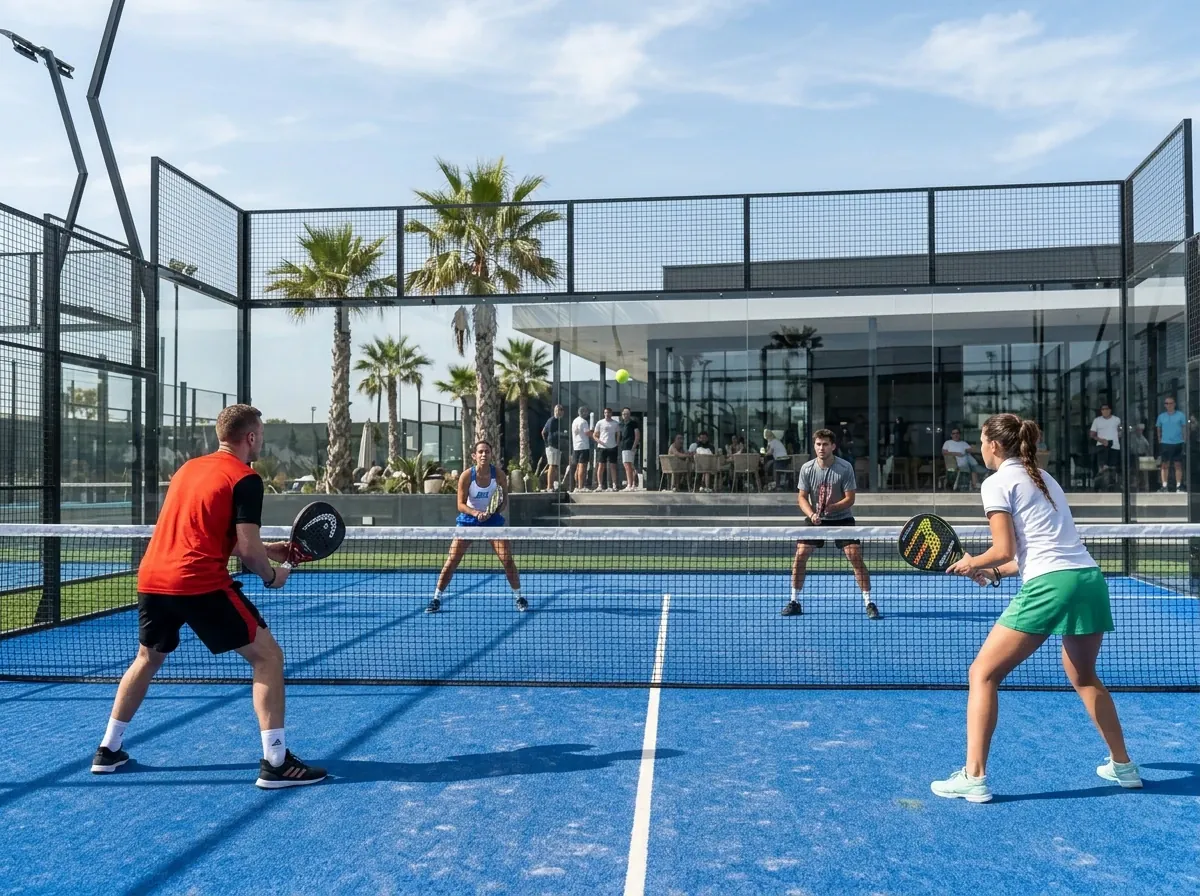
Padel is usually played in doubles on an enclosed court. The walls become part of the rally, and a little patience goes a long way.
01 / Start with a coached session.
An introductory clinic lets you learn the serve, scoring and how the walls work without organizing four players yourself. Ask the club whether equipment is included and whether the session is for complete beginners.
For a first visit, convenience matters more than a spectacular setting. Indoor courts help avoid weather disruption. Outdoor courts offer a different atmosphere; check local conditions before your session.
Some prices are for the entire court, others for each player. Confirm the duration, equipment fees, guest rules and cancellation policy. Membership discounts do not always apply to everyone in your group.
04 / Find people at your level.
Look for beginner open play, intro clinics or a club-run group. Tell the organizer how much racquet-sport experience you have so they can suggest the right session.
Padel, paddle tennis or pickleball?
They are different sports. Padel uses an enclosed court with walls in play. This directory focuses on padel and excludes tennis, POP tennis and pickleball-only facilities.
Padel combines racket skills with an enclosed court: the glass is part of play, rather than simply a boundary. A typical game is doubles, with two players on each side. You do not need to arrive with a tournament-level serve, but understanding the bounce and the walls makes an introductory session much easier to follow.
How do you serve in padel?
Start behind the service line, bounce the ball, and strike it at or below waist height into the diagonally opposite service box. The receiver lets the serve bounce before returning it. You normally have two attempts to put a legal serve in play. Ask your coach to demonstrate the service-line position and what happens when a served ball touches the fence.
When can the ball hit the glass?
During a rally, a ball can bounce on your side and then rebound from the glass before you return it. It must be played before its second floor bounce. Sending a shot straight into the opponents’ wall without first landing in their court loses the point. This is why learning when to wait for the rebound matters as much as hitting hard.
How does scoring work?
The familiar sequence is 15, 30, 40, game. The competition or club session determines the format used at deuce and how sets or tie-breaks are played. Agree on the format before starting, especially in timed social sessions.
A padel racket: ask whether rental is included, needs reserving, or costs extra. A tennis racket is not a substitute.
Suitable court shoes: ask the venue about its surface and footwear requirements. Choose footwear intended for movement around a court.
Water and comfortable sports clothing: for outdoor sessions, plan for the conditions at your booking time.
Booking confirmation: check arrival instructions, who is included in the booking, and whether every player needs an account.
Can you start without three other players?
You can look for an introductory class, organized open play, or a club’s player-matching group. A normal court reservation generally books the space; it does not promise that the club will find partners. Before paying, ask whether the session accepts individual beginners and how players are grouped by experience.
A private lesson and a group clinic solve different problems. Private coaching provides individual attention; a group clinic can introduce you to other new players. Check group size, lesson duration, equipment and the coach’s stated level requirements on the operator’s booking page.
Before reserving, use our padel price guide to distinguish per-player rates from whole-court prices. Then follow the club profile’s booking link to confirm today’s availability, total cost and cancellation terms.